Academic proofreading improves clarity, accuracy and consistency in academic writing. It strengthens arguments through precise language, alignment with the style guide and error-free presentation. Overall, it supports publication-readiness at pre-submission and post-typesetting stages.
This blog post explains what academic proofreading involves, when it takes place and how it improves academic writing. It outlines common proofreading interventions, shows how to find a qualified academic proofreader and summarises typical costs. It also clarifies the differences between proofreading and copyediting and professional and self-proofreading. Finally, it assesses whether large language models can replace professional proofreaders.
List of contents
- Key takeaways
- What is academic proofreading?
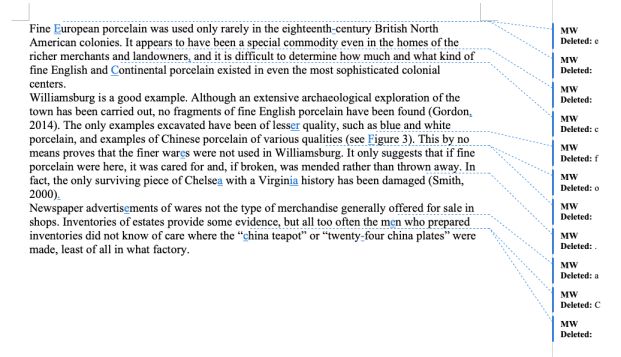
- Examples academic proofreading interventions
- When does academic proofreading take place?
- How to find a professional academic proofreader?
- How much does academic proofreading cost?
- Academic proofreading vs academic copyediting
- Professional academic proofreading vs self-proofreading
- Can large language models (LLMs) replace professional academic proofreading?
- Conclusion
Key takeaways
- Academic proofreading improves clarity, accuracy and consistency in academic texts
- Proofreading occurs after typesetting for books and before submission for articles, theses and essays
- Proofreading corrects grammar, spelling, punctuation, typography and citation formatting
- Professional proofreaders ensure consistency in terminology, layout and style guide use
- Directories, sample edits and portfolios help identify qualified academic proofreaders
- Proofreading differs from copyediting in depth, timing and purpose
- LLMs support proofreading but cannot replace human judgement
What is academic proofreading?
Academic proofreading ensures clear, accurate and publication-ready writing in essays, articles, theses and monograph.
Academic proofreading checks language, clarity and consistency in academic texts. It strengthens arguments through precise grammar, spelling, punctuation and formatting checks. It also improves readability through clear sentence structure and consistent terminology. Moreover, it supports compliance with required style guides in areas such as citations, headings and reference lists.
Key tasks in academic proofreading
- Correction of grammar, spelling and punctuation
- Elimination of typographic errors
- Consistency checks for terminology, capitalisation and numbers
- Style-guide alignment for citations and references
- Improved clarity through precise sentence structure
Examples academic proofreading interventions
Grammar correction
- Original: ‘The results shows a significant difference in both groups.’
- Revised: ‘The results show a significant difference in both groups.’
Consistency in terminology
- Original: ‘decision making’, ‘decision-making’, ‘decisionmaking’ across one text
- Revised: One consistent form used throughout the manuscript.
Citation and reference correction
- Original: ‘Foucault (1977: 45)’ in APA-style article
- Revised: ‘Foucault (1977, p. 45)’
Layout and typesetting checks
- Original: Heading appears at the bottom of a page with no text below
- Revised: Heading moved to the following page to avoid widows and orphans.
Cross-reference accuracy
- Original: ‘See Chapter 8 for discussion’ when the discussion appears in Chapter 7
- Revised: Correct cross-reference to Chapter 7
Elimination of typographic errors
- Original: ‘This this approach remains influential.’
- Revised: ‘This approach remains influential.’
When does academic proofreading take place?
Academic proofreading occurs at final stages of book production and at pre-submission stages of articles, theses, dissertations and essays to support accuracy and publication-readiness.
Academic proofreading occurs at two key points in the academic workflow. For monographs and edited volumes, it usually happens after typesetting. This stage allows a proofreader to check final page proofs for typographic errors, layout inconsistencies, incorrect pagination, repeated words, broken cross-references and issues introduced during the typesetting process. It ensures that the final printed or digital book meets professional standards.
For journal articles, theses and essays, academic proofreading happens before submission. This stage focuses on language accuracy, clear argumentation, consistent terminology, correct citation style and error-free formatting. It improves clarity and supports a smooth review or examination process.
Typical timing for academic proofreading
- Post-typesetting proofs for books and edited collections
- Pre-submission checks for articles, dissertations and coursework
How to find a professional academic proofreader?
Finding a professional academic developmental editor involves combining formal searches with direct evaluation of skills and expertise.
Search professional directories
To find a professional academic proofreader, search the directories of organisations for editing professionals. Many such organisations maintain searchable directories of qualified editors, which allow you to filter by subject expertise, service type or location. Examples include:
- ACES: The Society for Editing (USA)
- Association of Freelance Editors, Proofreaders and Indexers of Ireland
- Chartered Institute of Editing and Proofreading (UK)
- Council of Science Editors (USA)
- Editorial Freelancers Association (USA)
- Editors Canada
- European Association of Science Editors
- Institute of Professional Editors Limited (Australia and New Zealand)
- Mediterranean Editors and Translators
- Nordic Editors and Translators
- Northwest Editors Guild (USA)
- Professional Editors’ Guild (South and Southern Africa)
- Society of English-Language Professionals in the Netherlands
Ask for a sample edit
To find a professional academic proofreader who is a right fit for your text, ask them for a sample edit. A sample edit lets you see how an editor works with your text and how their work contributes to polishing your document.
Check portfolios and reviews
Finally, to fins a professional academic proofreader, check their websites and portfolios. Professional editors usually share testimonials or lists of publishers and academics they have worked with. When reviewing portfolios:
- look for experience with similar disciplines or manuscript types
- check whether they have worked with university presses or scholarly journals
- read client reviews to gauge reliability, communication and professionalism
How much does academic proofreading cost?
Chartered Institute of Editing and Proofreading (CIEP), UK
CIEP sets a suggested minimum hourly rate of £31.92 for proofreading as of 1 March 2026.
Editorial Freelancers Association (EFA), USA
EFA’s 2026 rate chart details per-word and per-hour rates for academic proofreading across disciplines.
- Academic humanities (student): 4–6¢ per word (~US$55–75/hour)
- Academic humanities (faculty/publication): 5.0–7.3¢ per word (~US$60.00–82.50/hour)
- Academic STEM (student): 5.0–7.5¢ per word (~US$50–75/hour)
- Academic STEM (faculty/publication): 5.0–7.3¢ per word (~US$60–80/hour)
Association of Freelance Editors, Proofreaders and Indexers of Ireland (AFEPI)
As of June 2026, AFEPI provides a starting point for proofreading rates: at €35.70 per hour or €8.90–14.50 per 1,000 words.
| Organisation | Suggested rates |
| CIEP (UK) | £31.92 per hour |
| AFEPI (Ireland) | €35.70 per hour or €8.90–14.50 per 1,000 words |
| EFA (USA) | Humanities: from 4–6¢ per word (~$55–75/hour) STEM: from 5.0–7.5¢ per word (~$60.50–82.50/hour) |
Academic proofreading vs academic copyediting
Scope, depth and purpose are different in academic proofreading and academic copyediting.
Academic proofreading focuses on accuracy, consistency and error correction. It targets grammar, spelling, punctuation, citation formatting, typographic errors and minor clarity issues. It supports final-stage polishing before submission or after typesetting.
Academic copyediting operates at a deeper level. It improves sentence structure, clarity of argument, paragraph flow, terminology consistency, tone and readability. It also checks logic, coherence and style-guide alignment at a structural level. Copyediting often happens before proofreading and prepares a manuscript for peer review or typesetting.
Key differences
- Academic proofreading corrects surface-level errors and formatting issues
- Academic copyediting improves clarity, structure and style
- Academic proofreading occurs at final stages
- Academic copyediting occurs earlier in the writing or publication process
- Academic proofreading focuses on accuracy
- Academic copyediting focuses on readability and coherence
Professional academic proofreading vs self-proofreading
The two approaches — professional academic proofreading and self-proofreading — differ in accuracy, distance and expertise.
Professional academic proofreading provides an external, trained perspective that identifies errors and inconsistencies that authors overlook. This service applies style-guide knowledge, checks for clarity, corrects grammar and punctuation with precision, and reviews the text without attachment to its content. This distance improves error detection. Professional services also include checks that require specialised skills, such as citation accuracy, reference list consistency, headings, cross-references and typeset page issues.
Self-proofreading supports early revisions but has limits. Authors read familiar sentences as they expect them to appear, so unnoticed errors persist. Style-guide alignment remains difficult without training, and structural inconsistencies often stay unresolved. Self-proofreading helps refine content, but it rarely ensures publication-ready accuracy.
If you would like a fast, straightforward way to ensure accuracy, consistency and publication-ready quality in your academic writing, learn more about the express editing service for shorter texts.
Key differences
- Professional academic proofreading offers expert error detection
- Self-proofreading remains limited by author familiarity
- Professional proofreading applies style guides accurately
- Self-proofreading provides surface checks without specialist tools
- Professional proofreading handles complex elements such as citations and layout
Can large language models (LLMs) replace professional academic proofreading?
Large language models can support aspects of academic proofreading but cannot replace trained professional proofreaders.
LLMs can handle routine error detection with speed and identify patterns in grammar, punctuation and terminology. They can also spot structural inconsistencies and citation irregularities. Moreover, they can offer suggestions that improve clarity through precise sentence choices. However, they do not match professional judgement in areas that require discipline knowledge, style-guide expertise, ethical boundaries, contextual reading or sensitivity to argumentation. A professional proofreader also checks typeset proofs, layout issues, cross-references and page-level problems that LLMs cannot evaluate reliably.
Key points
- LLMs can detect surface-level errors
- LLMs can assist with clarity checks and consistency
- LLMs can hallucinate
- LLMS lack understating of nuance and context
- Professional proofreaders offer judgement that supports academic credibility
- Professional proofreaders apply style guides consistently across large texts
- Professional proofreaders handle typeset pages, layout and cross-referencing
- Professional proofreaders follow ethical limits on intervention
Academic proofreading can benefit from LLM assistance, but expert proofreaders provide accuracy, judgement and ethical practice that LLMs cannot replicate.
Conclusion
Academic proofreading ensures clear, accurate and consistent academic writing that meets professional and publication standards. It improves language, structure and style while supporting style-guide compliance and error-free formatting. Although automated tools assist, expert human proofreaders provide depth, judgement and reliability that remain essential.
Contact me if you are an academic author looking for editing or indexing services. I am an experienced editor offering a free sample edit and an early bird discount.
If you would like professional help refining your text for clarity, consistency and presentation, you can also use my short-text editing service for a fast, straightforward edit with transparent pricing and a 5-day turnaround.